
What does OSHA actually require for handwashing?
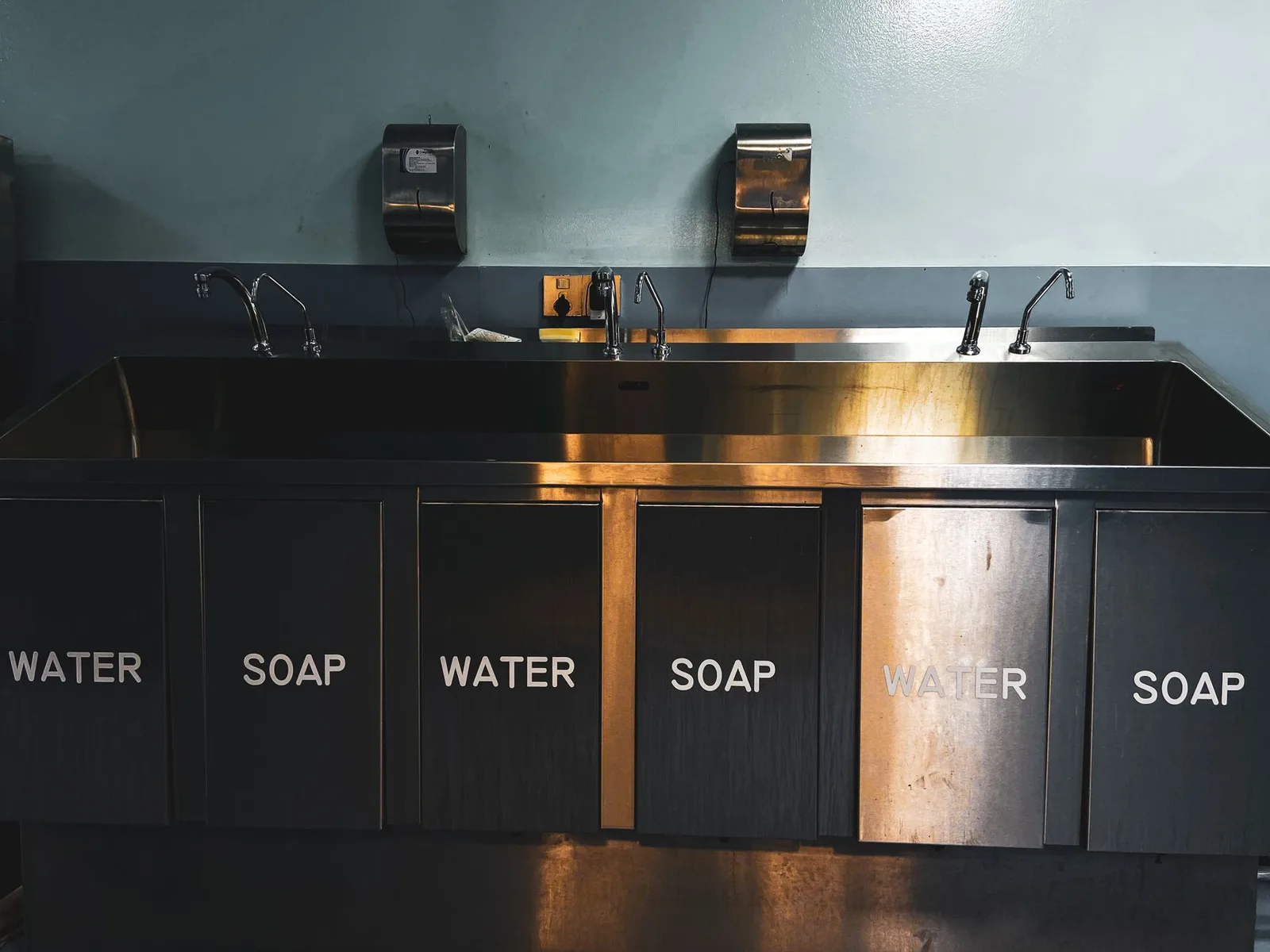
Two different rules get confused constantly, so let's separate them. OSHA 1926.51(f)(1) requires washing facilities specifically where employees apply paints, coatings, herbicides or insecticides, or work around similar contaminants. It is not a blanket handwashing mandate for every job site. Separately, 29 CFR 1910.141(d)(2) says washing facilities need soap and towels or a hand drying device. Hand sanitizer alone does not meet that standard. Toilet counts fall under a different rule entirely: OSHA 1926.51(c)(1) sets the ratio of toilets to workers on construction sites. If your Baltimore crew is spraying finishes, staining decks, or applying pesticides on a landscaping job, you need a compliant handwashing station rental on site, not just a jug of sanitizer by the truck. Agricultural operations follow a separate track. OSHA 1928.110 requires field sanitation for hand-labor employees, including potable water and handwashing, at one facility per 20 workers, reachable within a quarter mile walk. That matters for farm and agricultural restrooms work out toward Laurel, 23.2 miles southwest of the city.
Why do Baltimore job sites need a separate handwashing station?
Because a porta potty and a handwashing station solve different problems. A standard unit gives workers a place to go. It does not give them soap and running water for their hands afterward, and OSHA treats these as separate obligations. Baltimore general contractors managing multi-trade sites, especially anywhere near paint booths, coating stations or pesticide storage, typically pair portable toilet rental with a dedicated wash unit. This also comes up on food-adjacent sites. A grease trap pumping job or event with food vendors often needs a wash station near the prep area regardless of the paint-and-coatings trigger, just as good practice. OSHA 1926.51(a)(1) also requires an adequate supply of potable water at all places of employment, which is the water source your handwashing unit has to tie back to. If you are scoping a bigger buildout, our construction site services page walks through how wash stations, toilets and fencing usually get bundled on one delivery.

How many handwashing stations does a Baltimore site need?
There's no fixed federal ratio for handwashing stations the way there is for toilets, but the practical rule crews use is one station near each area where contaminant exposure happens under 1926.51(f)(1), plus one near any food or break area. Compare that to toilets: OSHA 1926.51(c)(1) requires 1 toilet facility for 20 workers or fewer, then 1 toilet seat and 1 urinal per 40 workers once you pass 20, and 1 per 50 once you hit 200 or more. If you are trying to size out toilets alongside wash stations, how many porta potties do i need covers that math in detail, and osha portable toilet requirements breaks down the full ratio table. For agricultural crews under 1928.110, remember the quarter-mile walk limit drives placement more than headcount does. A site in Dundalk, 8.1 miles east of Baltimore, with three separate coating stations, generally needs three separate wash setups, not one for the whole crew.
Where should handwashing stations be placed on site?
Put them at the point of use, not at the site entrance where nobody walks past them mid-task. A station 60 feet from where painters are spraying does more good than one parked by the gate. Accessibility matters too if the public or a mixed-ability crew is on site. ADA Standards section 302.1 requires the ground surface at the unit to be stable, firm and slip resistant, and section 308.2.1 sets forward reach limits so the soap dispenser and towel dispenser sit within 48 inches high and 15 inches off the ground at the low end. Section 309.4 also requires that faucet handles and dispensers work with one hand and take no more than 5 pounds of force, no twisting or pinching. For general placement logic that applies to full restroom setups too, our porta potty placement guide covers driveway clearance, ground stability and service access, and pairs well with an ada accessible porta potty if the public will use the site. Baltimore sites near Parkville, 7.7 miles northeast, and Overlea, 7.3 miles northeast, both see this come up on mixed commercial-residential jobs.
Renting wash stations alongside toilets is usually one delivery. Baltimore Porta Pros can quote a portable sink rental or a straight hand sanitizer station rental for sites that don't trigger the 1926.51(f)(1) contaminant rule but still want something at the entrance. For events, event restroom rental and festival restroom rental packages typically fold wash stations in with the restroom count. Anyone building out a full compliance checklist before a Baltimore permit inspection should also look at porta potty rental checklist.
Does hand sanitizer meet OSHA's handwashing requirement?
No. 29 CFR 1910.141(d)(2) specifically requires soap and towels or a hand drying device. Sanitizer can supplement that, but it does not replace it. If your site falls under the 1926.51(f)(1) trigger for paints, coatings or pesticides, you need a real wash station, not just a dispenser bolted to a fence post.
Is a handwashing station required for every construction site in Baltimore?
Not automatically. The federal trigger under 1926.51(f)(1) is tied to specific work: applying paints, coatings, herbicides, insecticides or similar contaminants. Sites without that exposure still need toilets under 1926.51(c)(1), but a separate wash station is more of a best-practice add than a blanket mandate.
Can a handwashing station and a porta potty share one delivery?
Yes. Baltimore Porta Pros routinely delivers both together, especially on home renovation porta potty jobs and multi-trade commercial sites. One trip covers placement, service scheduling and pickup for both units.
What's the difference between a handwashing station and a portable sink?
Mostly capacity and features. A basic handwashing station covers the soap-and-towel requirement under 1910.141(d)(2). A portable sink rental often adds a larger basin, hot water, or multiple stations, useful for food vendors or larger crews.
Do agricultural sites near Baltimore follow different rules?
Yes. OSHA 1928.110 governs field sanitation for hand-labor agricultural work, requiring potable water, toilets and handwashing at one facility per 20 employees, within a quarter mile walk. That's a different standard than the general construction rule under 1926.51.
Next step
Get a delivery date
Tell us the address, the dates and the headcount. We size the order and confirm the route.