
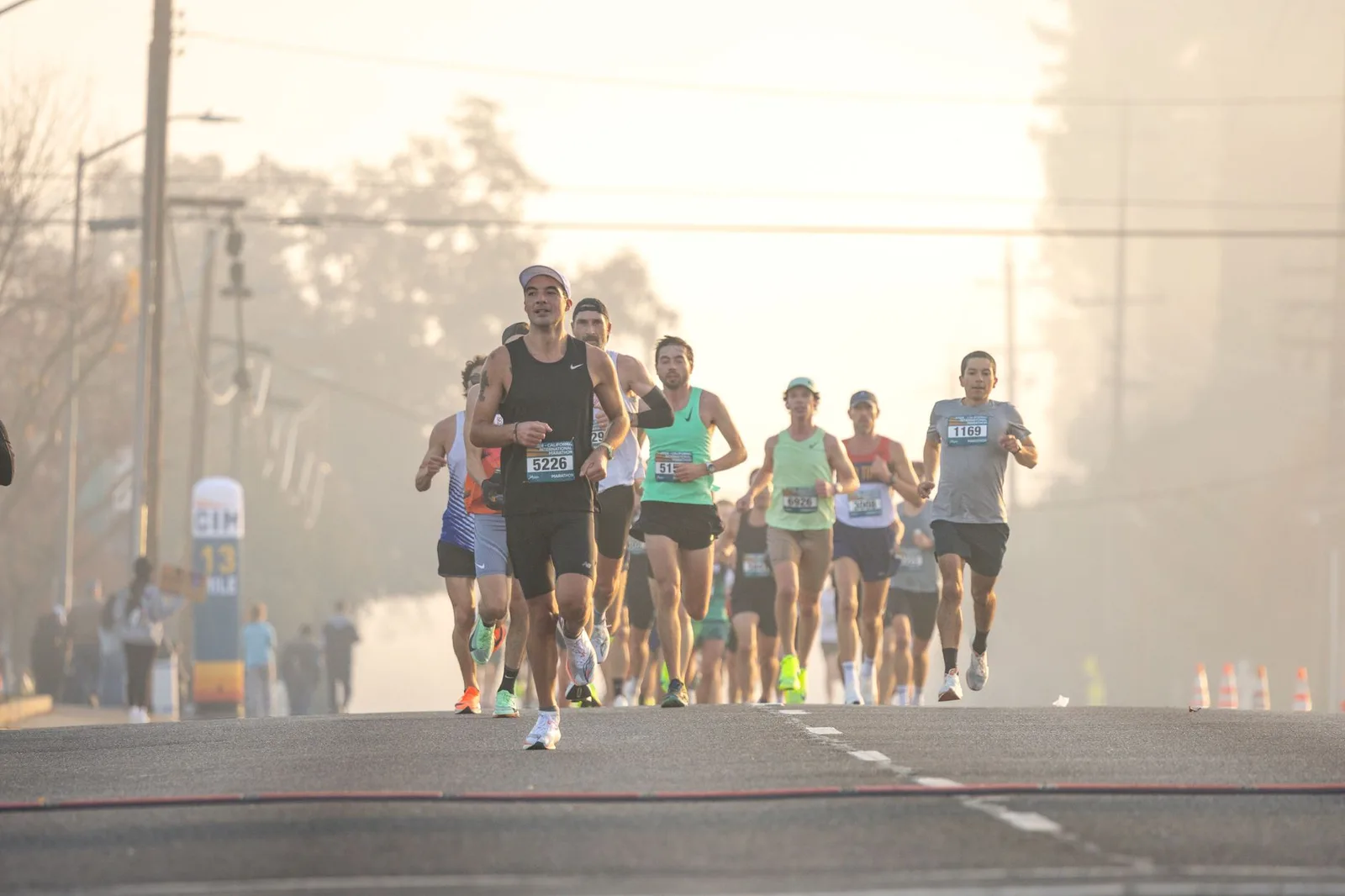
How many restrooms does a race need?
OSHA 1926.51(c) sets construction ratios, but race organizers use it as a starting baseline: 1 toilet for smaller crews, scaling up past 20 people. For a road race, most planners multiply expected runners by a much lighter ratio, since people move through fast and don't linger. A 5,000 runner marathon in Baltimore typically needs restrooms clustered at the start line, spread thin along the route, and doubled at the finish where runners stop moving and start waiting. Use how many porta potties do i need to run the math for your specific field size. Aid stations near mile markers get one or two standard units, while the start and finish areas need a bigger bank, often paired with a 2 stall restroom trailer or larger for staff and VIP use. Course marshals and medical tents near the finish should get their own dedicated unit so runners aren't competing with volunteers for the same door. If your race also draws spectators along the route, budget separately for event restroom rental at the busiest viewing points, not just the runner path itself.
What else does a race site need besides restrooms?
Most races run early morning starts in low light, and lit routes near the start corral matter for both safety and photography. If your course needs area lighting before dawn, a light tower rental covers the assembly zone. Timing systems, PA equipment and medical tents often draw more power than a generator can comfortably carry alone, so races increasingly bring in a temporary power pole for a stable 200 amp service at the finish line stage. If you're setting one, know how to brace a temporary power pole correctly: guy wires or a braced base plate keep it upright against wind and crowd contact, and OSHA 1926.404(b)(1)(ii) governs the ground fault protection tied into that circuit. Course barriers matter too. Crowd control barrier rental keeps spectators off the running lane at narrow points, and temporary fence rental secures staging areas, sponsor tents and gear check zones, priced from $30 a day per section. Runners crossing timing mats or aid stations also benefit from handwashing station rental near food and hydration tables, since 29 CFR 1910.141(d)(2) requires soap and towels or a hand-drying device wherever washing facilities are provided.
Where should race restrooms go on the course?
Placement drives everything else. Units belong on stable, level ground with clear approach room, ideally 60 feet of straight clearance if a roll-off or trailer delivery is also planned for that site. ADA Standards section 213.2 requires that where portable units are clustered, at least one accessible unit is included, so any aid station cluster of five or more standard units needs an ADA accessible porta potty in the mix, priced from $120 for a week rental. Keep units off the actual race lane and clear of turn radii where a pack of runners might clip a door. Baltimore's course logistics teams should also plan for post-race cleanup, since a race village generates real trash volume fast; a same-day roll-off dumpster rental at the finish festival area handles banners, cups and vendor waste without overflowing bins. For gear storage, staging tents or timing equipment overnight before race day, a storage container rental or mobile office trailer rental gives race staff a lockable base near the start. Placement guidance from porta potty placement guide covers ground stability and setback distance in more depth.
Pricing for race day restrooms
| unit | duration | price range |
|---|---|---|
| standard | weekend | $125 to $400 |
| standard | week | $130 to $500 |
| ada | weekend | $199 to $300 |
| deluxe | week | $150 to $290 |
| trailer | event | $2,499 to $3,899 |
Races that run a single weekend often rent on the weekend rate rather than a full week, and multi-day festival races may need monthly porta potty rental if the event runs a full training season. See porta potty rental cost for a broader cost breakdown by unit type.
How far in advance should we book race restrooms?
Book as soon as your course map and runner estimate are set, ideally weeks ahead for a marathon-scale field. Baltimore venues near Towson, 8.0 miles north, and Dundalk, 8.1 miles east, often host qualifying races and book fast in peak season.
Do we need permits for restrooms placed along a public course route?
Placement in the public right of way needs confirming with the city. Race routes frequently cross public streets and city-controlled land, so check with Baltimore before finalizing restroom and barrier locations on the course.
Can restrooms be moved mid-race if the course changes?
Units can be relocated before race day, but not safely during an active race. Lock in final placement once the course map is confirmed, especially near aid stations and the finish corral.
What about restrooms for race staff and volunteers overnight?
Overnight staff often need a heated or lit unit if setup starts before dawn. Pair a standard unit with a light tower rental at the staging tent for early crews.
Do spectators need separate restrooms from runners?
Yes. Spectator zones along the route see heavier, longer-dwelling crowds than the runner path itself. Budget separate units for viewing areas, not just aid stations, especially near Rosedale, 6.8 miles east, or other dense-viewing sections of the course.
Next step
Get a delivery date
Tell us the address, the dates and the headcount. We size the order and confirm the route.